In April 2026, humankind orbited the moon for the first time in over half a century.
Artemis II was the first crewed flight beyond low Earth orbit since the dawn of the internet, and the 24-hour livestreams of their ten-day mission caught the attention of the world. I recently watched some of the coverage of their return journey, when they had the incredible experience of the moon fully eclipsing the sun.
This was never a key part of the mission; the previous launch window - delayed by a winter storm - would never have offered such an alignment, nor would the schedules developed and abandoned over the previous five years of heat shield and life-support issues.
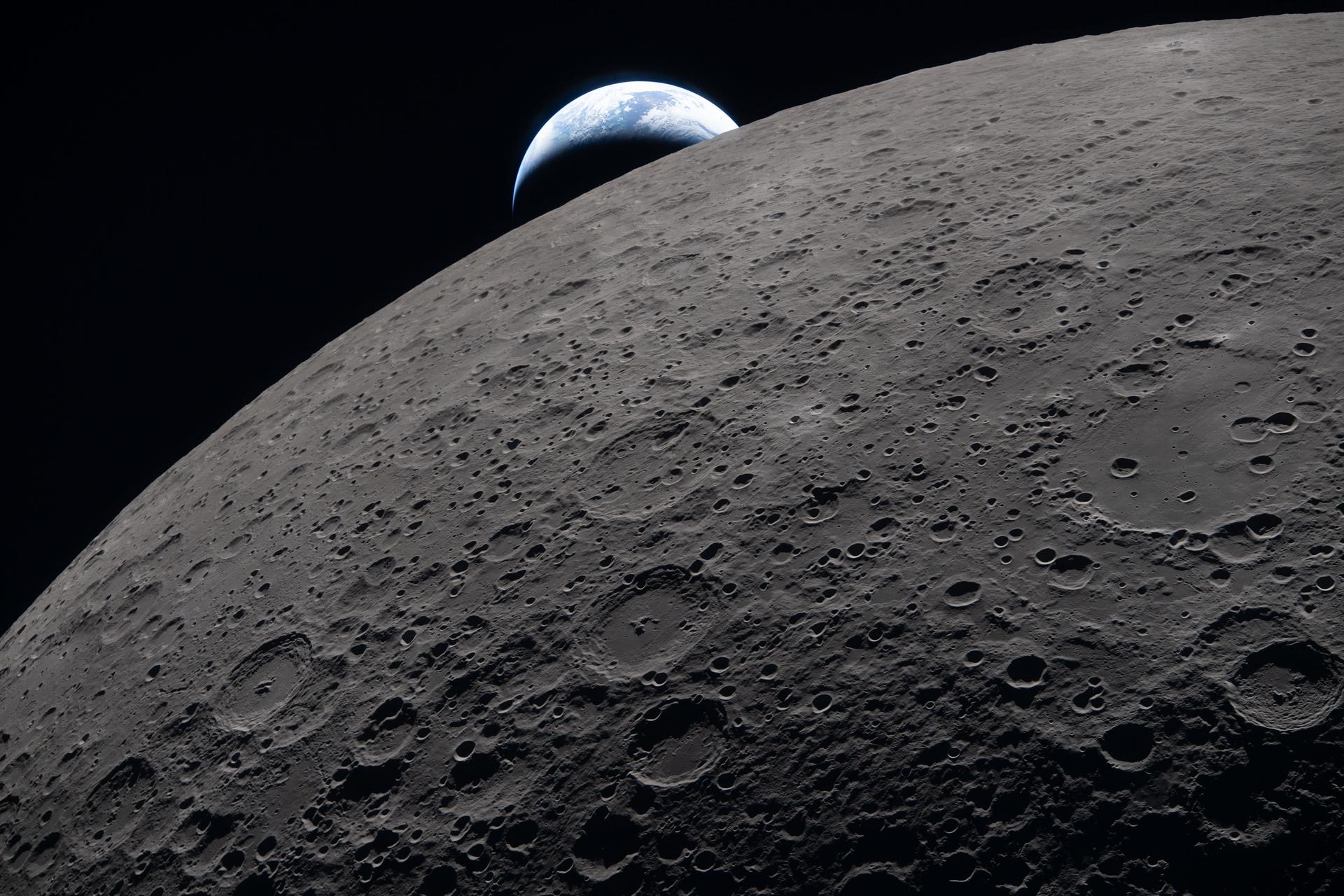
“I know this observation won’t be of any scientific value,” says Artemis pilot Victor Glover, reporting back to mission control, “but I’m glad we launched on April 1st, because humans haven’t evolved to see what we’re seeing, and it is truly hard to describe.”
And then he describes how the moon has eclipsed the sun, the moon now lit only by earthshine, and in the absence of sunlight he can see the planets lined up along the plane of the ecliptic, and how the human eye sees the colours of space when the sun is fully obscured.
It’s beautifully poetic, achingly human, simply a man telling his home planet about the wondrous sights he’s seen out in the cosmos.
Elegy for a Dead World is a game created by Dejobaan Games and PopCannibal, released in 2014, about space exploration, abandoned civilisations, and poetry.
Playing as an astronaut, you pass through a portal to one of three worlds, each named after a romantic-era English poet. Your interactions with these worlds are intangible, merely an observer and chronicler of whatever meaning you wish to glean from the ruins, for you have little context for the architecture, the sculptures, the fundamentally alien machinery left over when a culture dies.
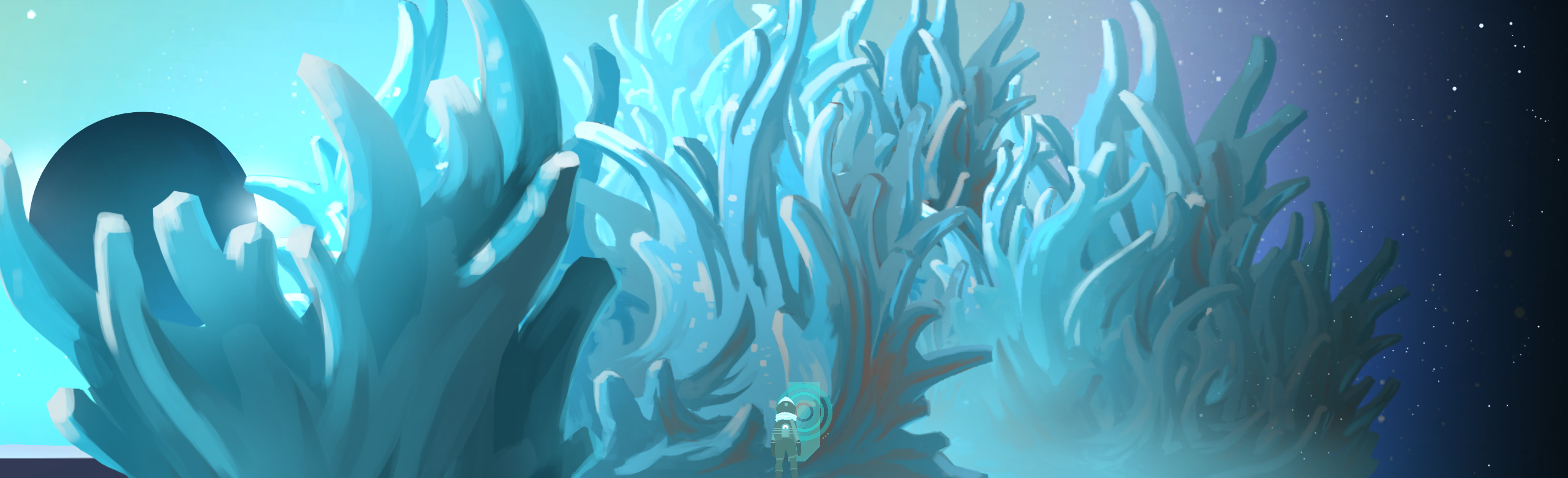
It seems strangely harmonious that a cultural shift that began in flame and ascension should end with ice and emptiness. These angels may have formed naturally, but I would like to imagine them the work of some Byronic artist, the last of their kind.
Each world offers a series of writing prompts, starting points in fixed locations for those who need an impetus to explore and describe. Perhaps more interesting is the option to forego prompts entirely, and press Tab to write wherever the landscape moves you, wherever the remnants of civilisation ask questions for which you can only ever posit speculation.
In 2022, Dejobaan removed Elegy for a Dead World from sale due to issues in the online story-sharing functionality, a galaxy of stories, disparate interpretations and loosely-inspired fiction about these three worlds.
The issue in question was load-bearing, and the devs understandably didn’t feel right continuing to sell the game missing a notable chunk of its advertised functionality.
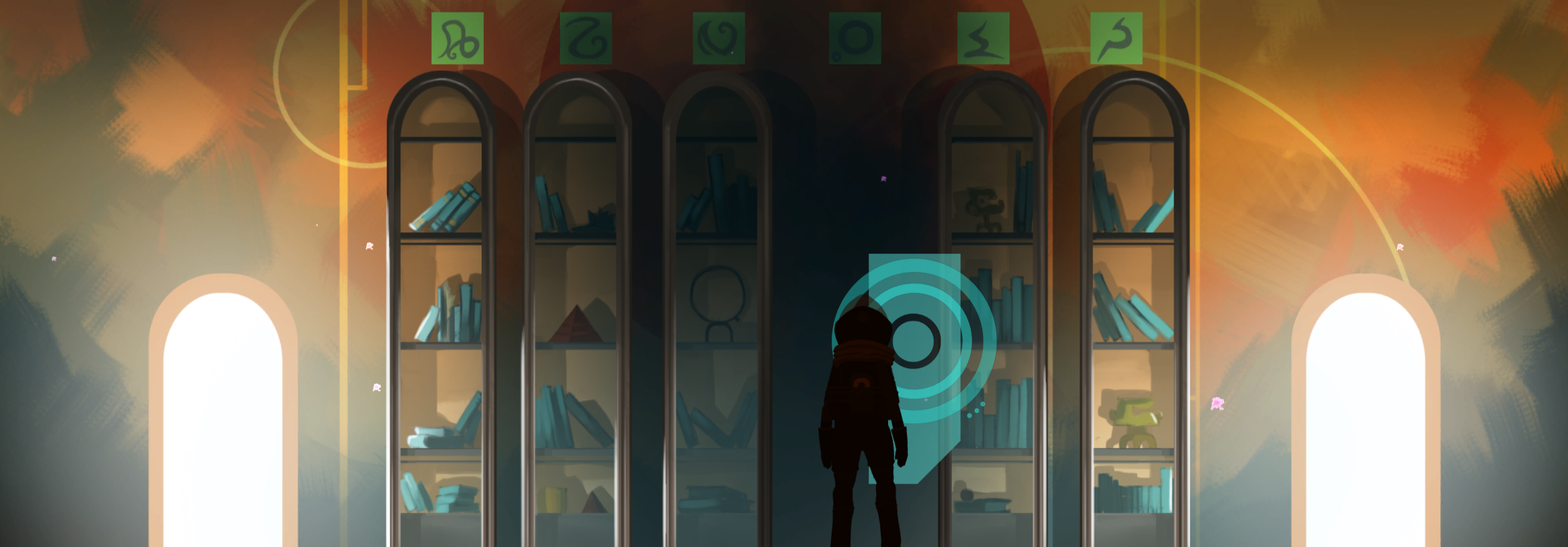
Their books were works of beauty, illuminated with flair enough to challenge the life-altering words within - for only words of great import were committed to paper, rather than buried deep in bottomless data-libraries.
But for me, Elegy was never about sharing my writing. When it launched back in 2014, I was desperately trying to reconcile my creative life with reality. I’d always been a writer, but a decade of serious attempts at traditional publication alongside a demanding dayjob and observing the progression of my mother’s Alzheimers had resulted in nothing but an increasing propensity for burnout.
I wanted to write, but the intensity of my efforts had backed me into a creative corner. If I was Going to Be A Success, I needed to only write my best work. If I Had to Write My Best Work every time I sat down, I would simply burn out again.
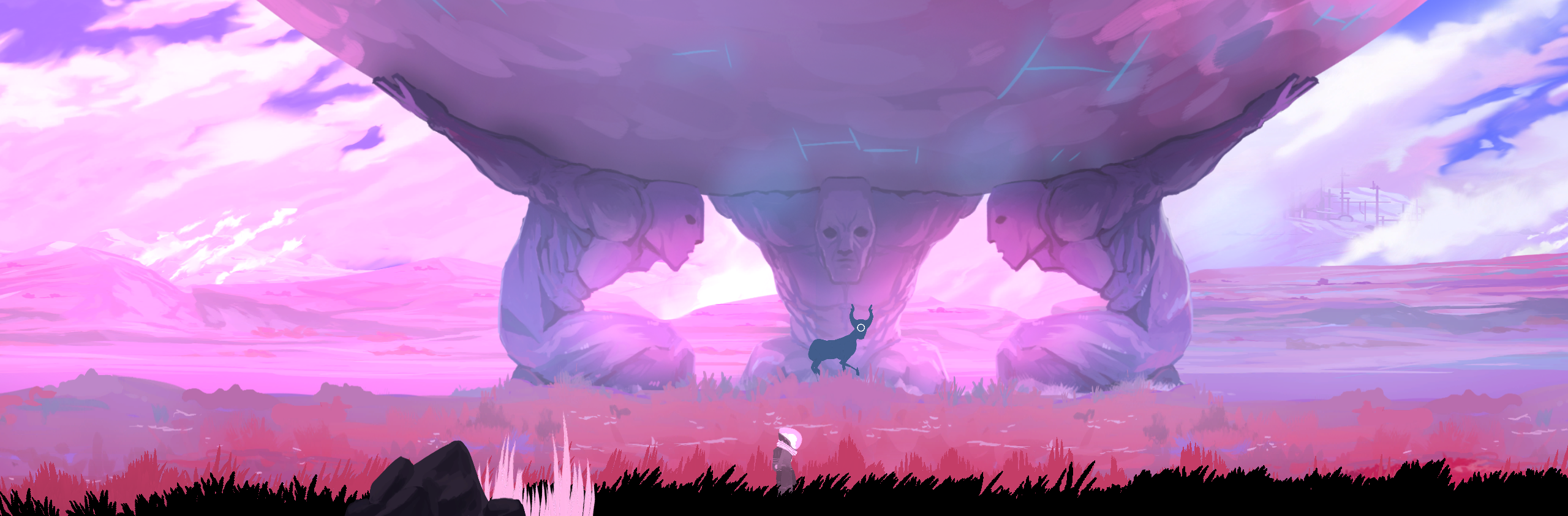
Upon these grasslands, three stone colossi hold the weight of the world upon bent backs, arms outstretched in untenable tension. Yet here they stand beneath cloud-scudded skies, unweathered by the passage of millennia.
Is this a ceremonial space, a ritual reminder, or simply artistic intent?
Simultaneously, I defined myself by my writing. I couldn’t simply not write.
Elegy was a way through this choke-point, a safe space to engage those creative gears, where no success was expected, no pressure applied.
Though I didn’t realise it at the time, it also became a space for me to experiment with microfiction. I’d spent a decade writing 100,000-word novels; the idea that I could just write a hundred words and say something felt revolutionary.
In the years running up to the Artemis II mission, there was some very reasonable criticism of the program by the scientific community.
The costs of crewed spaceflight - of safely and reliably protecting human beings against vacuum and radiation and equipment failure for an extended flight - are so much higher than uncrewed probes, that you could fund multiple scientific missions for the cost of sending a small capsule of four humans around the moon.
If science was the only benefit of these missions, I’d perhaps give that argument greater credence, though we can’t even assume that such equivalences would stand up to reality.
With the rise in populist movements across the globe, it’s far from certain that funding for a high-profile crewed flight could politically be exchanged for smaller, more scientifically-effective probe missions, and the future of such funding may well rest heavily on public engagement with space travel. The collective effervescence and “moon joy” shared by both the astronauts and the viewing public is no small part of this.
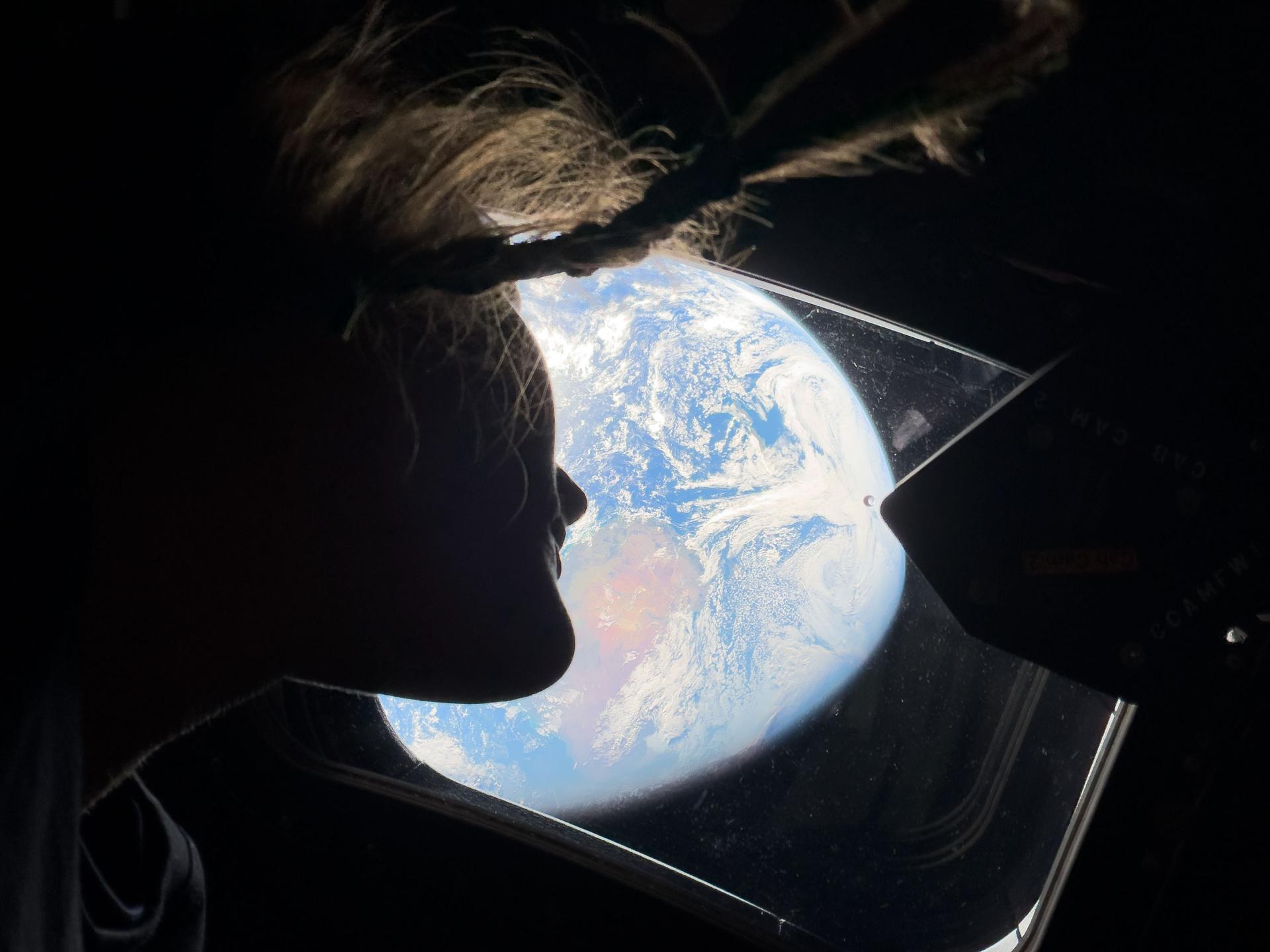
Even so, after Artemis II I’m convinced there’s something meaningful to having crewed missions, that it matters that actual living people are slingshotting beyond Low Earth Orbit and out into the wider cosmos, taking artistic photographs, seeing things with human eyes and expressing the fresh perspective on our fragile planet that such a journey into the dark seems to offer.
It feels oddly fitting that Elegy for a Dead World is no more. A dead game containing three dead worlds each in turn paying homage to poets themselves a hundred-and-fifty years dead.
All we can do is attempt to put into human words what they felt like.